


Prosecutors displayed messages jurors never saw before convicting Karmelo Anthony of murder — including one they said described stabbing someone and licking blood from a blade — as they fought Friday in McKinney, Texas, to preserve his conviction.
Retired District Judge Michael Chitty is hearing Anthony’s request for a new trial. Judge Sid Harle removed Judge John Roach, who presided over Anthony’s murder trial, from the remaining trial-court proceedings earlier this week.
Harle found that a reasonable outside observer could question whether Roach appeared impartial after the judge publicly said the jury “got it right” and defended several of his trial decisions.
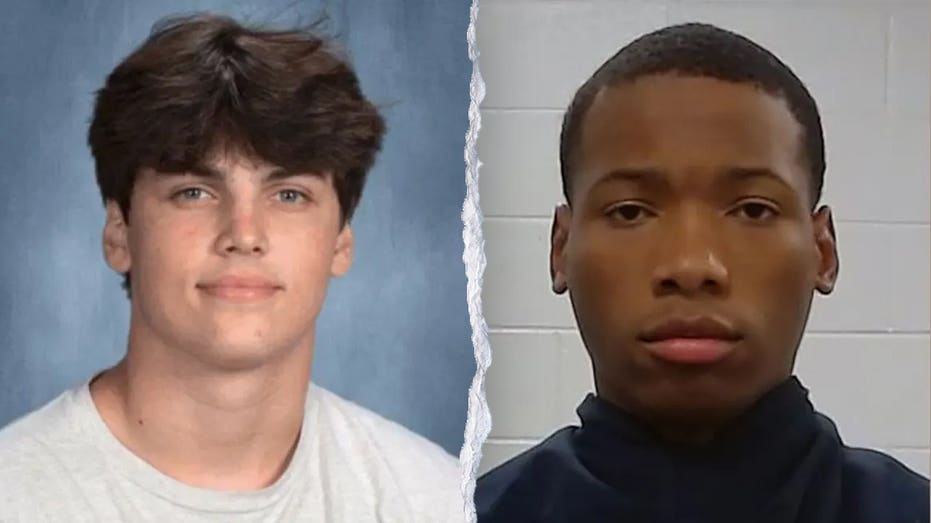
Anthony, 19, was convicted in June of stabbing and killing 17-year-old Austin Metcalf during an altercation at a Frisco track meet. A Collin County jury sentenced Anthony to 35 years in prison.
During the state’s case Friday, prosecutors displayed phone messages, photographs and school disciplinary records that they said were kept from Anthony’s original jury under the agreement.
Among the material was an October 2024 message prosecutors said Anthony sent about stabbing someone and licking blood from a blade. Other messages prosecutors attributed to Anthony referenced guns, knives and starting fights, along with photographs they said showed him holding firearms.
The state also presented school records that prosecutors said documented fights and altercations involving Anthony before the killing. Wirske argued the material would have been damaging if character evidence had been introduced at trial.
The court has not made findings on the allegations presented by either side.
At the center of the new-trial hearing is an oral agreement between Anthony’s original defense team and prosecutors to keep potentially damaging character evidence about both sides from the jury.
Former lead defense attorney Mike Howard testified Thursday that he understood the agreement to allow Anthony to testify if his testimony remained focused on the confrontation under the tent at the track meet.
Howard said that changed on the final day of trial, when prosecutors told the defense the agreement would not apply if Anthony took the stand and that the defense had already opened the door to character evidence.
He said the dispute led to a heated break in the proceedings and made Anthony unwilling to take the stand.
Under cross-examination, Howard acknowledged the lawyers never expressly agreed on whether a testifying defendant was covered by the arrangement. He said he could not say whether prosecutors acted in bad faith.
Lead prosecutor Bill Wirske said the agreement was mutual and that the parties were aligned on the need to keep character evidence out of the trial. Wirske said the state did not believe the agreement applied to Anthony’s testimony.
Former defense attorney Toby Shook testified Friday that the original defense team understood the agreement to allow Anthony to testify about the confrontation under the tent at the Frisco track meet.
Shook said prosecutors raised the issue on the final day of trial, arguing that a reference to Anthony’s chess club in opening statements had opened the door to character evidence and that the agreement did not cover Anthony taking the stand. Shook said he was taken aback because the defense had always expected Anthony to testify in support of his self-defense claim.
FOLLOW THE FOX TRUE CRIME TEAM ON X
SIGN UP TO GET THE LATEST TRUE CRIME NEWS
Wilson also introduced a training presentation that Wirske had used in continuing legal education courses on self-defense. One slide advised defense lawyers that the client “(probably) needs to testify,” and Shook agreed that a defendant’s testimony is often important in a self-defense case.
Shook said the defense updated Anthony about the dispute during a break and explained that Roach said he could not enforce the unwritten agreement. Shook testified that Roach said he would rule on any objections based on the evidence presented at trial.
LIKE WHAT YOU’RE READING? CLICK HERE FOR MORE
The former defense attorney said that left Anthony unsure whether taking the stand would allow prosecutors to introduce the character evidence the agreement was meant to keep out. Shook said Anthony ultimately decided not to testify because he feared prosecutors would “find a reason to open the door” to that evidence.
KARMELO ANTHONY FOUND GUILTY OF MURDER IN TEXAS TRACK MEET STABBING
Under cross-examination, Wirske said the lawyers never discussed the details of what the agreement would allow if Anthony testified. He said both sides knew Anthony might take the stand in a self-defense case, but prosecutors believed they would first need to work through the limits of his testimony.
Shook maintained that the defense understood the original agreement to include Anthony’s testimony about events under the tent. He acknowledged, however, that the lawyers could have had different understandings of the deal.
Chitty questioned both sides about whether the agreement remained in place when Anthony was considering testifying. Wirske said prosecutors were still willing to honor it but feared that testimony from Anthony or his mother could inadvertently open the door to character evidence.
The defense rested its case shortly before noon Friday.
Criminal defense attorney Clint Broden, who was not involved in Anthony’s case, told Fox News Digital that an unwritten agreement affecting whether a defendant can testify is “almost unheard of” in a murder case.
Broden said it is “extremely hard” to win a self-defense case without the defendant taking the stand to explain the fear he felt and why he believed force was necessary. He said the defense’s larger problem may be that the agreement was never put on the record, leaving the lawyers without a clear way to resolve their differing interpretations before trial.
After the defense rested, prosecutors called Wirske as their first witness. He testified that the lawyers and court officials faced an unprecedented wave of threats, doxxing, swatting incidents and online misinformation surrounding the case.
Wirske said the threats targeted Anthony, the Metcalf family, lawyers, judges and potential witnesses. He said the security concerns led the parties to use paper filings kept with Roach rather than the court’s usual online system.
LISTEN TO THE NEW ‘CRIME & JUSTICE WITH DONNA ROTUNNO’ PODCAST
The prosecutor denied that the arrangement amounted to a secret file. He testified that the materials remained available through the court but were handled differently because the parties feared information could be used to target people involved in the case.
Wirske also defended the limits on cameras and public access, testifying that the threat level dictated the security precautions and that lawyers on both sides shared concerns for Anthony’s safety and the safety of witnesses.
Anthony’s motion also argues that courtroom-access restrictions violated his Sixth Amendment right to a public trial and that jury instructions limited jurors’ ability to consider his self-defense claim.
Howard also said the defense discussed waiving some public-trial access because of security concerns, but that no Sixth Amendment waiver was made on the record. He testified that the decision not to use an overflow room was tied to technology concerns, not a specific security threat.
He testified that the lawyers and court officials faced what he described as an unprecedented wave of threats, doxxing, swatting incidents and online misinformation surrounding the case.
Chitty must rule on the motion by Monday under Texas rules. If he does not grant it by then, the motion will be denied by operation of law and Anthony’s direct appeal will continue.
Fox News Digital has reached out to Anthony’s defense team for comment.
Fox News’ Peter Cuddihy contributed to this report.
